
04 · Physical computing modules
AI Block
Build smart systems with sensors and code
- Recommended for
- Upper elementary to high school
- Recommended hours
- 4~8차시
Use light, sound, distance, and motion sensors to master the input–process–output loop, then build smart devices that solve everyday problems.
01 Overview
Overview
AI Block combines a wide range of sensors and actuators in a block form factor, so students can design and build their own smart devices.
Learners systematically work through the input–process–output flow — a natural fit for creative maker projects that solve everyday problems.
Runs well as a tiered program from basic coding through convergent creative projects.
02 Key Features
Key Features
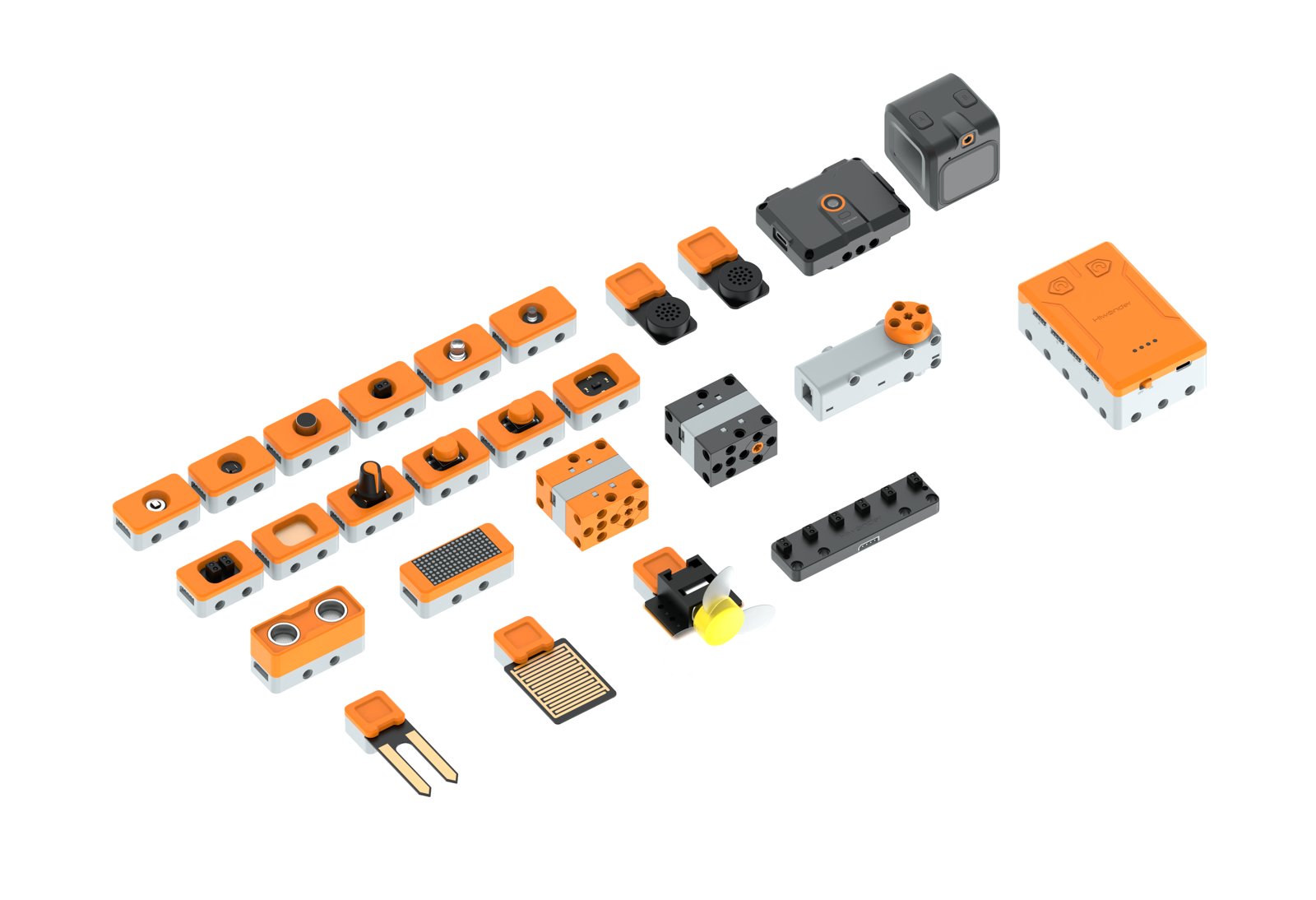
Many sensor modules
Freely combine light, sound, distance, motion, and other sensors.
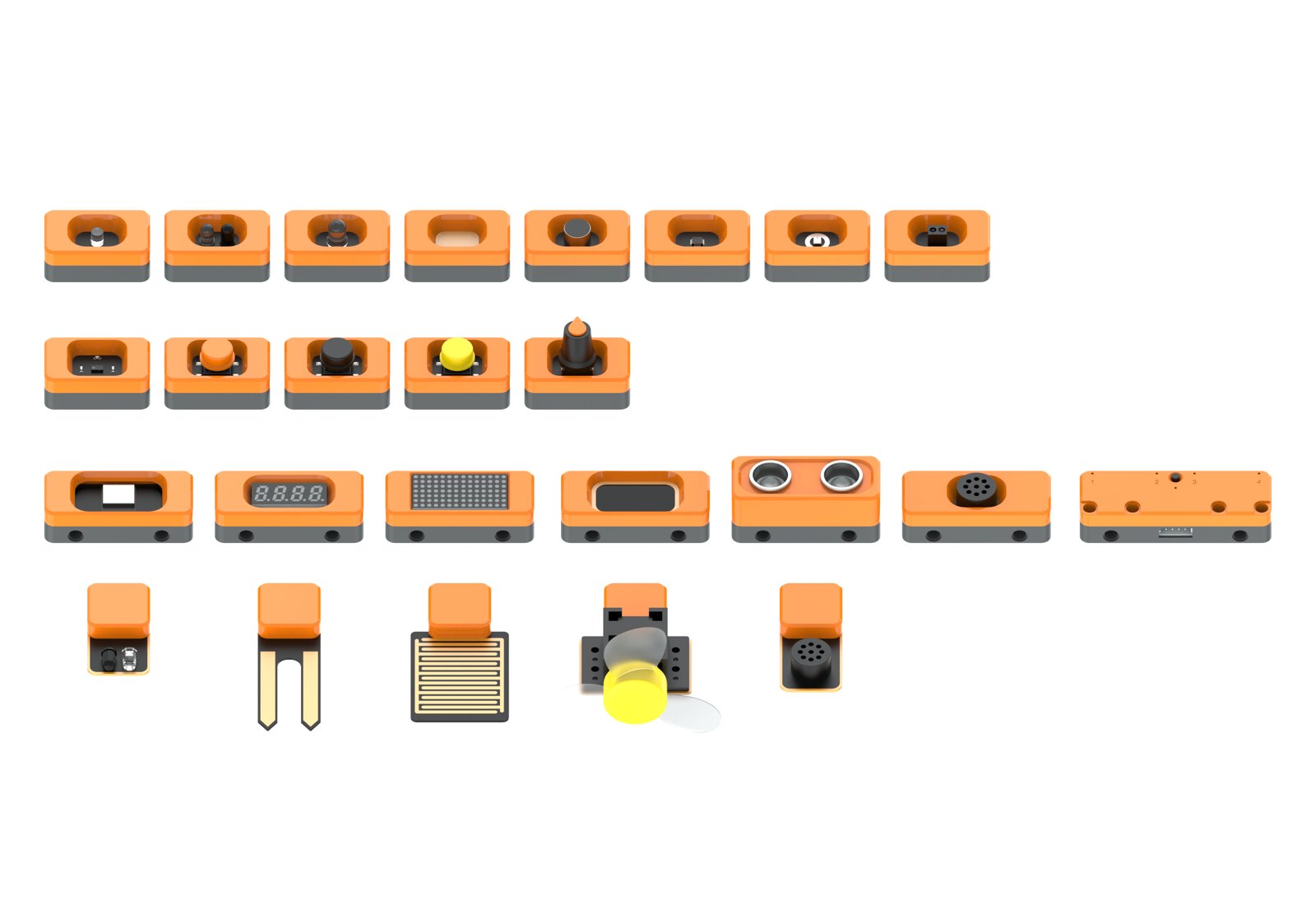
Actuator control
LEDs, motors, and buzzers give instant feedback on program behavior.
Block coding environment
Intuitive block coding welcomes complete beginners.
Smart device making
Build alarms, auto-response, smart-home, and other real-life devices.
Expandable
Mix and match modules to control difficulty step by step.
Project learning
Fits the define–design–build–present project cycle.
03 Education Points
Education Points
01
Student-led hands-on lessons
Students control the robot themselves to internalize concepts.
02
Sensor-data problem solving
Learners analyze sensor data to complete missions.
03
AI recognition drives robot actions
AI vision and voice recognition results are mapped to robot behavior.
04
Team projects and presentations
Teams complete missions and share their results.
05
Career and advanced exploration
Extends into engineering / AI career exploration and deeper projects.
06
Camp and expo booth use
Suitable for rotating booths and camp missions.
04 Class Structure
Class Structure
| Step | Class name | Core concept | Activity | Est. hours |
|---|---|---|---|---|
| Step 1 | Understand robot structure | Hardware and operating principles | Review parts and follow assembly guide | 1 session |
| Step 2 | Basic control practice | Movement and motion control | Code and run basic motions | 1 session |
| Step 3 | Sensor / AI experience | Sensor data and AI recognition | Practice with sensors and AI modules | 1–2 sessions |
| Step 4 | Mission challenge | Problem-solving thinking | Take on tiered missions | 1–2 sessions |
| Step 5 | Team project and demo | Convergent, creative thinking | Plan and present a team project | 1–2 sessions |
05 Available Formats
Available Formats
06 Specifications
Specifications
| Product Name | AI Block |
|---|---|
| Dimensions | 21.4 × 16.2 × 15.5 cm |
| Core | ESP32 |
| Charging Voltage | 5V |
| Charging Current | 1500 mA |
| Charging Time | ~3.5 hours |
| Runtime | ~3.0 hours |
| Battery | 3000 mAh / 11.1 Wh |
| Max Operating Voltage | 4.2 V |
| Rated Voltage | 3.7 V |
| Programming | Block coding / Python |
| Recommended For | Upper elementary – High school |
| Recommended Sessions | 4–8 sessions |
07 What's Included
What's Included
Base kit
Updating soon- Robot body
- Dedicated controller / board
- Sensor and cable modules
- Charger and power cable
- Storage case
- Class manual
09 FAQ
FAQ
We tailor the robot lineup and curriculum to your institution's goals.
Some product information and images are adapted from Hiwonder's official materials for educational use.